
Follow up on overdue invoices with a process your team can rely on
Overdue invoices need regular attention, and different customers may need different reminders. Debt Collector lets you define collection rules, schedule reminder stages and send relevant invoice details from Business Central.
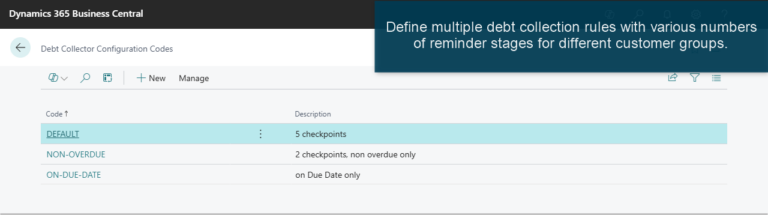
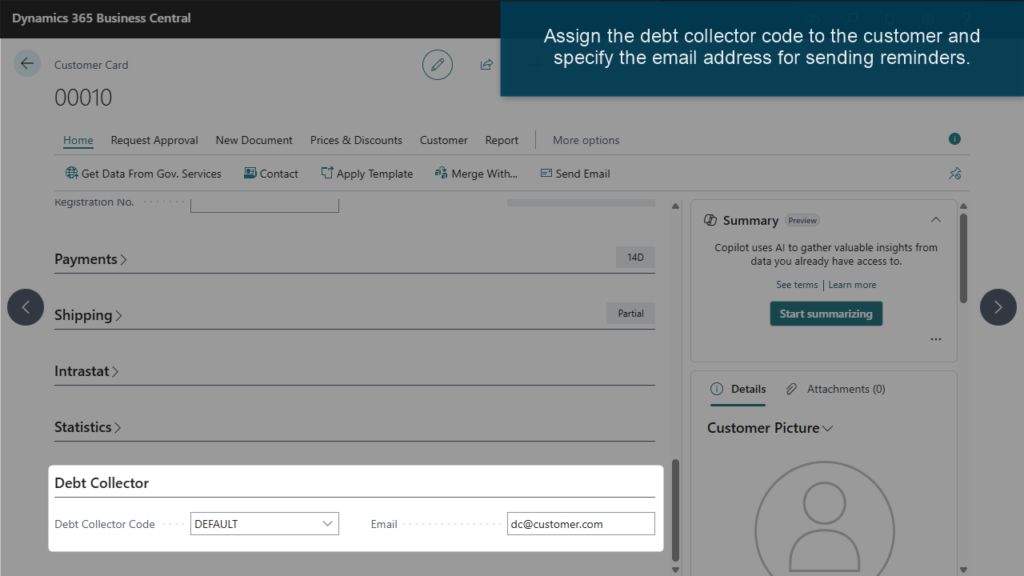
Create collection rules and assign them to customers. Adapt follow-up to the relationships your finance team manages.
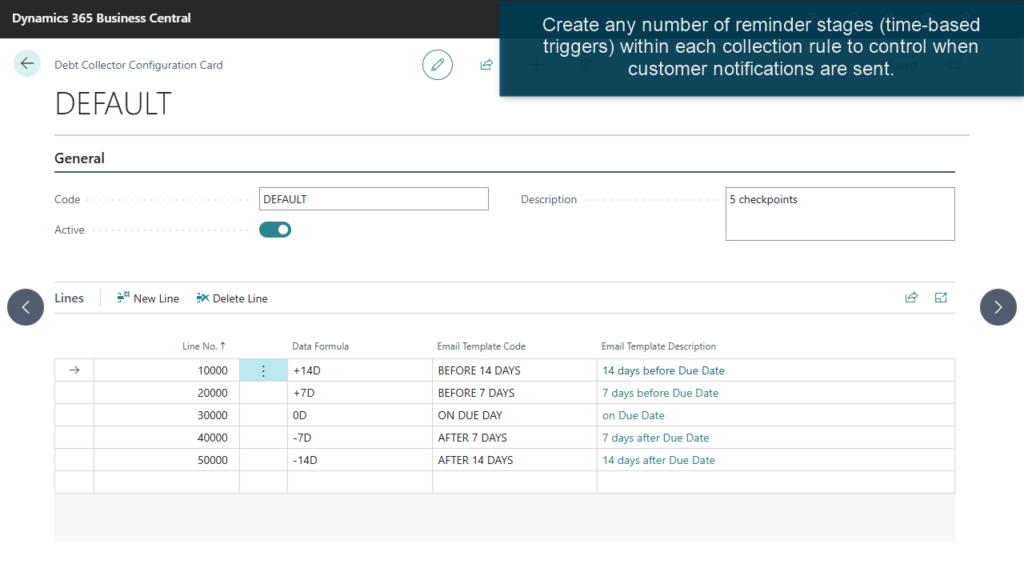
Define reminder stages before, on or after the payment due date. Automatically send the message assigned to each stage, following the collection rule configured for the customer.
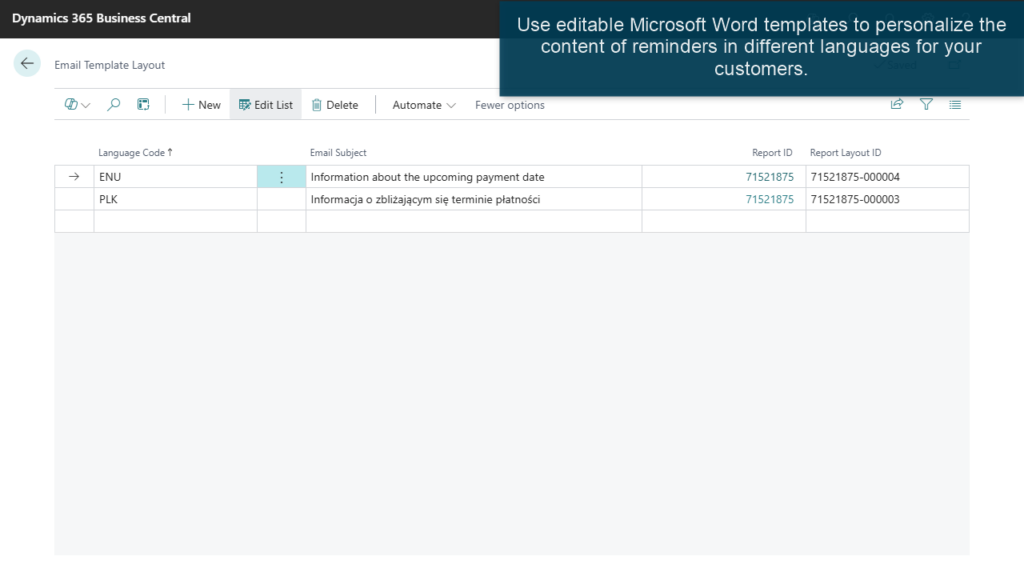
Use editable Microsoft Word templates and the customer’s language. Keep payment reminders clear and appropriate for the recipient.
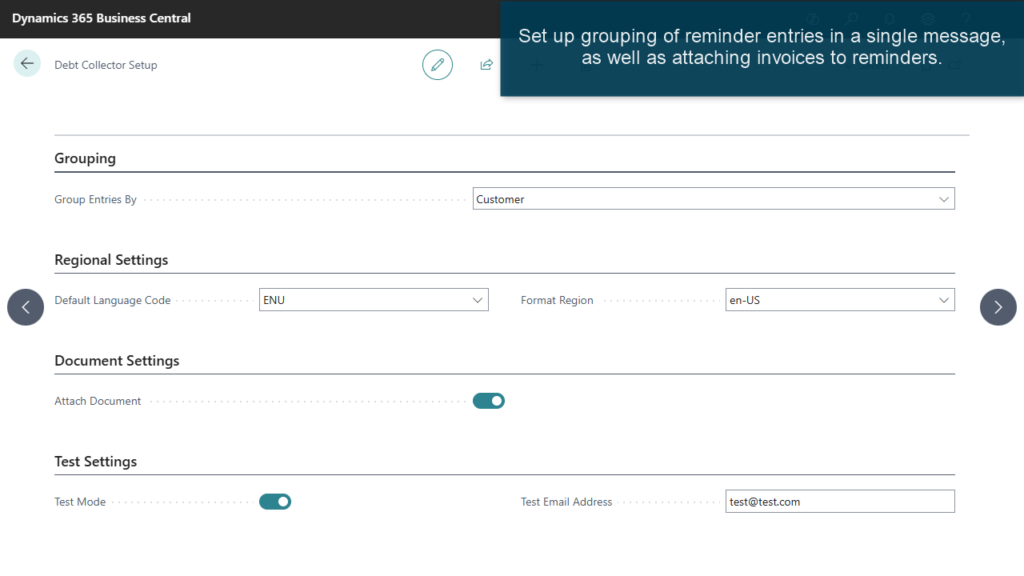
Attach outstanding invoices to reminder emails, giving the recipient the documents needed to check the balance.
A distributor works with customers in several countries, each with different payment habits. The finance team assigns a collection rule to each customer, deciding when reminders should be sent and how the wording should change at each stage. A sequence can start with a friendly message before the payment due date and continue with follow-ups if an invoice becomes overdue.
Debt Collector sends the reminders using Word templates prepared in the customer’s language. Where a customer has several outstanding invoices, reminder entries can be grouped in one message, with the relevant invoices attached. The recipient has the documents needed to check the balance and arrange payment without first requesting copies.
Routine follow-up continues according to the assigned rule. The finance team spends less time drafting individual emails and finding attachments, and can focus on customer replies, disputed invoices and payments that need a personal conversation. Different customers can follow different reminder sequences while the team manages the process in Business Central.